DIRECT ANSWER
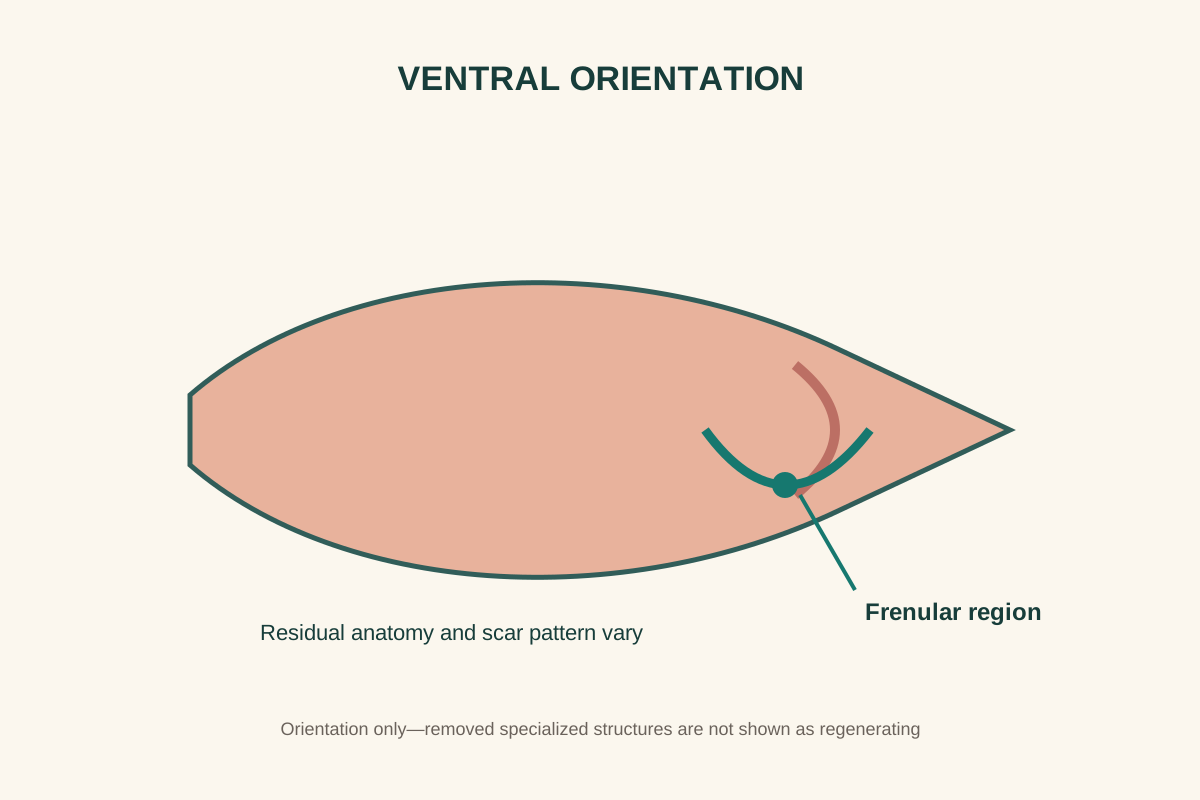
Restoration may expand tissue around the frenular region, but it cannot be assumed to regenerate a frenulum that was removed or recreate its original organization and innervation. The amount and form of residual frenular tissue vary after circumcision.
EVIDENCE SUMMARY
How strong and direct is the evidence?
What the frenulum is
The frenulum is a specialized ventral fold associated with the original connection and movement between prepuce and glans. Developmental and innervation research helps describe original preputial anatomy [1] [2]. It does not show that mechanical expansion recreates a removed structure.
What may remain
Some adults have a visible or palpable residual fold, attachment, scar-adjacent tissue, or other ventral features; others have little obvious remnant. Appearance alone cannot establish the original anatomy or microscopic nerve distribution. Residual tissue may influence mobility, comfort, device fit, and how force is distributed.
Expansion is not regeneration
Skin expansion involves proliferation and remodeling of tissue that is present. It does not rerun embryological development or prove recreation of a removed frenulum, specialized nerve pattern, or exact tissue junction. Human tissue-expansion studies support general biological growth [3], while direct restoration evidence remains limited [4].
Anatomical innervation studies establish that nerves exist and vary in penile tissues. They do not establish whether restoration changes objective thresholds, pleasure, or orgasm.
Practical implications
Ventral tissue may respond differently to gripping or pressure because geometry differs, not because a universal biological target has been proven. Avoid concentrated loading that causes pain, altered sensation, discoloration, or skin damage. A concerning scar, persistent pain, tethering, or urinary symptom needs qualified clinical assessment rather than an improvised restoration correction.