DIRECT ANSWER
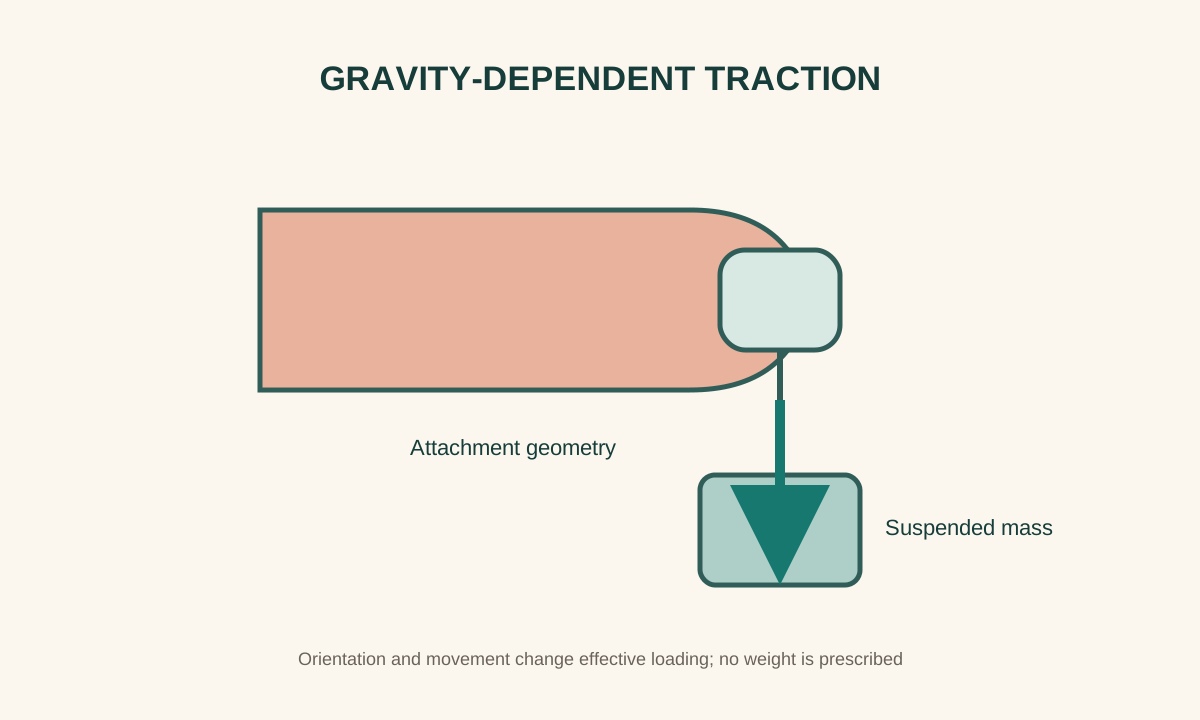
Weighted methods use suspended mass and gravity to create traction. Effective loading changes with body position, orientation, acceleration, and movement, so the marked mass does not describe the complete tissue exposure. No validated restoration weight target exists.
EVIDENCE SUMMARY
How strong and direct is the evidence?
Mass, direction, and geometry
A hanging mass creates force in the direction of gravity, transmitted through the attachment and tissue geometry. Standing, sitting, walking, changing angle, or supporting part of the assembly changes the effective load. Sudden motion can briefly create a different exposure from quiet suspension.
Practical characteristics
Possible conveniences
- Simple visible loading concept
- Few active adjustments in some designs
- Traction changes predictably with orientation
Limitations
- Position-dependent
- Difficult under some clothing or activities
- Movement may create impact or abrupt loading
- Attachment pressure can limit tolerance
Risk does not depend on mass alone
Contact area, leverage, attachment security, duration, movement, and circulation also matter. A lighter arrangement can still create a concentrated pressure point; a comfortable static position may become hazardous during abrupt motion. Increasing mass is not proven to increase growth rate.
Evidence boundary
General tissue-expansion literature describes biological responses to stretch [1], while direct restoration research does not validate a suspended-load protocol [2]. Stop for pain, altered sensation, discoloration, coldness, swelling, or skin injury.