DIRECT ANSWER
Evaluate a restoration device by its mechanism, fit, contact and circulation risks, repeatability, cleanability, removal, instructions, support, and transparency—not by popularity, testimonials, or promises of a superior growth rate.
EVIDENCE SUMMARY
How strong and direct is the evidence?
Start with the mechanical system
Mechanism and exposure
- What creates load: hand force, traction, opposing elements, air pressure, or suspended mass?
- Where are gripping and pressure points?
- Can adjustments be repeated without pretending they are a validated dose?
- How do posture and movement change the geometry?
Fit and removal
- Is sizing guidance clear and tied to measurable landmarks?
- Can the device be removed rapidly if sensation or color changes?
- Does fit rely on excessive compression to prevent slippage?
- Are adjustment limits and foreseeable misuse explained?
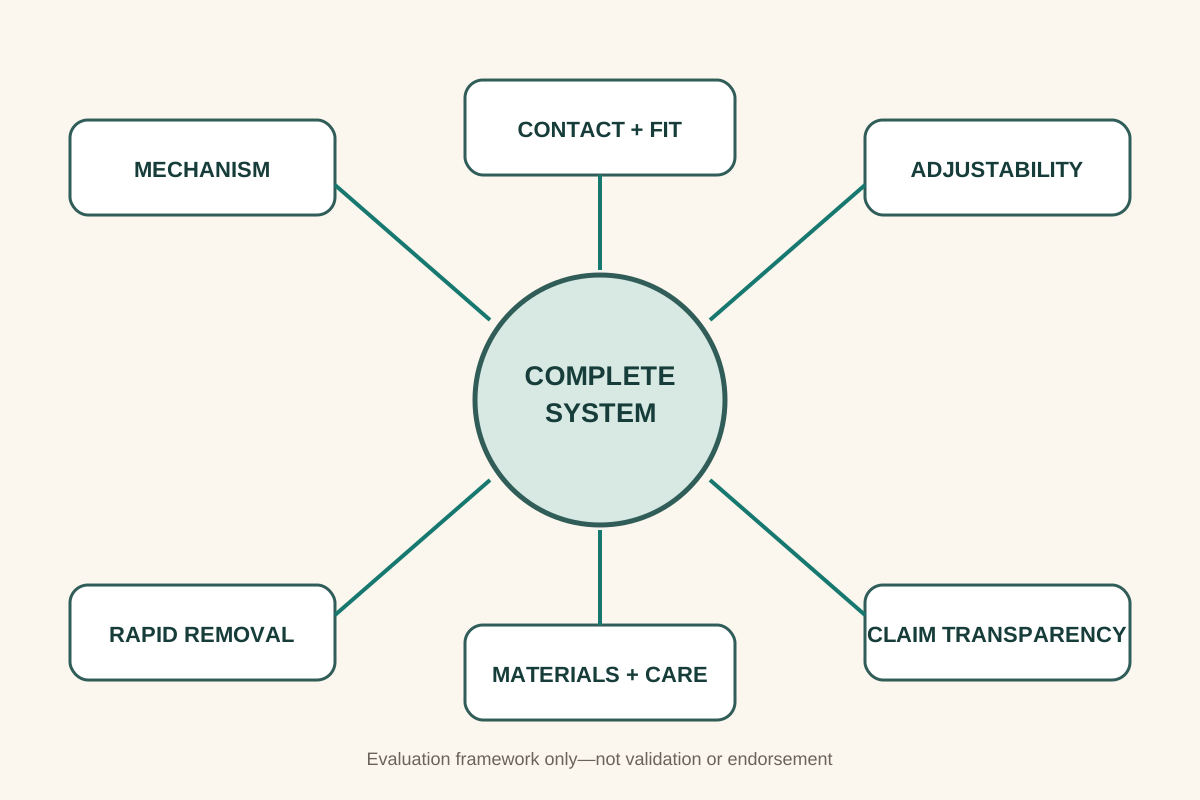
Evaluate skin-contact design
- Contact area: concentrated pressure can matter even when overall force seems modest.
- Materials: specific, traceable disclosures are more useful than vague claims such as “body safe.”
- Cleanability: surfaces, seams, valves, and replaceable parts should be accessible.
- Moisture: the design should account for sweat, skin oils, and thorough drying.
- Wear components: replacement availability and inspection criteria should be stated.
Separate three kinds of claim
User feedback
Can reveal usability themes and uncommon problems, but is self-selected and cannot establish efficacy.
Bench information
Can show mechanical repeatability, material properties, or cleaning compatibility, but not human tissue outcomes by itself.
Clinical evidence
Requires an appropriate population, outcomes, comparison, follow-up, and transparent limitations. No current study validates a universal restoration device protocol.
Transparency checklist
- Clear mechanism and intended-use boundaries
- Specific sizing, fitting, removal, cleaning, and inspection instructions
- Conservative warning signs and contraindication boundaries
- Accessible materials and replaceable-part information
- Plain warranty and return terms, including hygiene limits
- No invented certification, medical approval, or superiority claim
Watch for guaranteed timelines, “clinically proven” language without a matching study, sensitivity promises, exact-anatomy regeneration, fixed community schedules presented as prescriptions, or claims that comfort proves safety.
Evidence boundary
The direct prospective cohort used heterogeneous approaches and does not validate a device [1]. The targeted survey documents experiences, not comparative effectiveness [2]. Manufacturer instructions may be important for operation, but they are not independently validated medical protocols unless supported by appropriate research.