DIRECT ANSWER
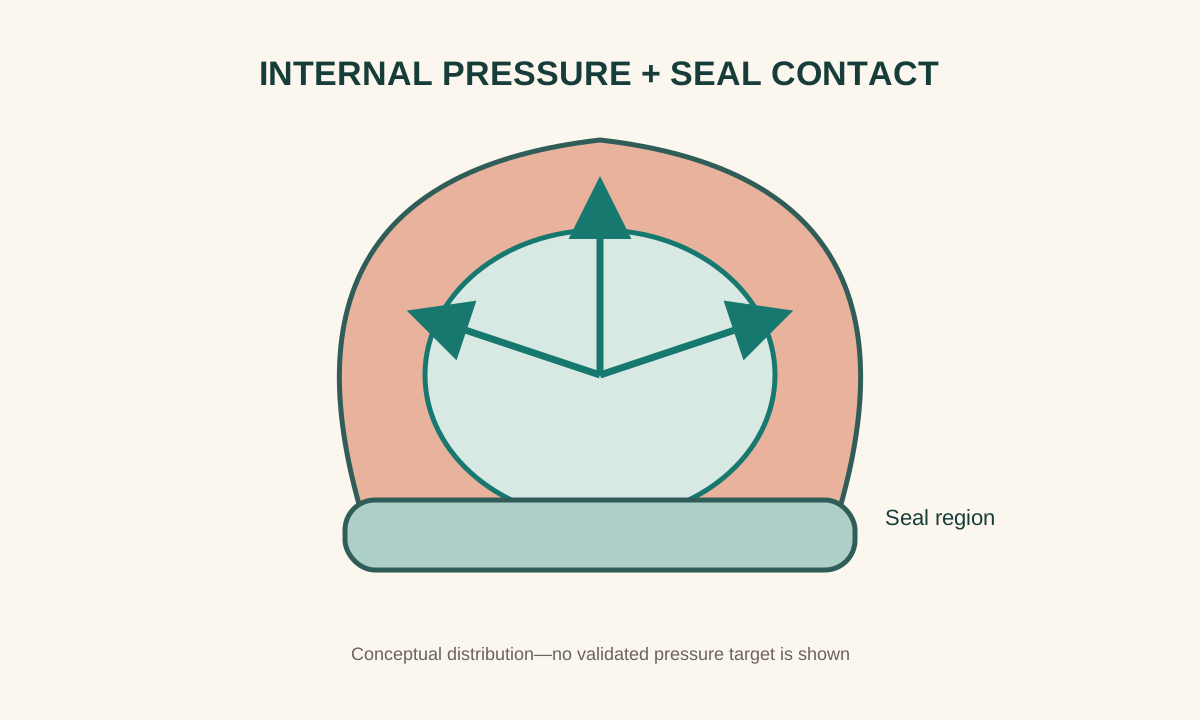
Inflation methods seal a space within positioned skin and introduce air so internal pressure loads the surrounding tissue. This geometry differs from straight traction, but there is no validated restoration pressure target and no evidence that inflation is universally superior.
EVIDENCE SUMMARY
How strong and direct is the evidence?
How inflation changes loading
Internal pressure can create outward, circumferential, and geometry-dependent strain rather than primarily axial traction. The actual tissue exposure depends on the inflated shape, contact boundaries, sealing arrangement, folds, skin stiffness, and any gripping compression.
Seal and fit are part of the system
A poor seal may leak or produce inconsistent loading. Trying to solve leakage through greater gripping pressure can increase constriction. Fit must therefore be considered together with internal pressure—not as a separate convenience issue.
Pressure is not the whole dose
A pressure reading alone would not describe contact area, duration, tissue geometry, circulation, motion, or individual response. No restoration study has established a universal quantitative target. General stretch-mediated skin research supports mechanobiology, not an inflation prescription [1].
Potential concerns
- Excessive internal pressure or gripping constriction
- Localized folds or pressure points
- Loss of sensation that delays recognition of a problem
- Contamination or retained moisture in poorly cleaned parts
- Components that cannot be released quickly
Stop for pain, numbness, marked discoloration, coldness, persistent swelling, skin damage, or urinary symptoms. Do not assume use during sleep is safe.