DIRECT ANSWER
Dual-tension devices generally place tissue between opposing points of force—often an outer gripping assembly and an internal pushing element. Geometry can change regional loading, but there is no clinical proof that these devices selectively grow only “inner” or “outer” skin.
EVIDENCE SUMMARY
How strong and direct is the evidence?
Opposing points and geometry
A device can create tension between skin held by a gripper and a component that changes the distance or position of the opposing contact. Component shape, skin placement, contact area, device angle, and individual anatomy affect how load is distributed.
Users may accurately report where they feel tension, yet perceived tension is not a measurement of microscopic strain or future regional growth.
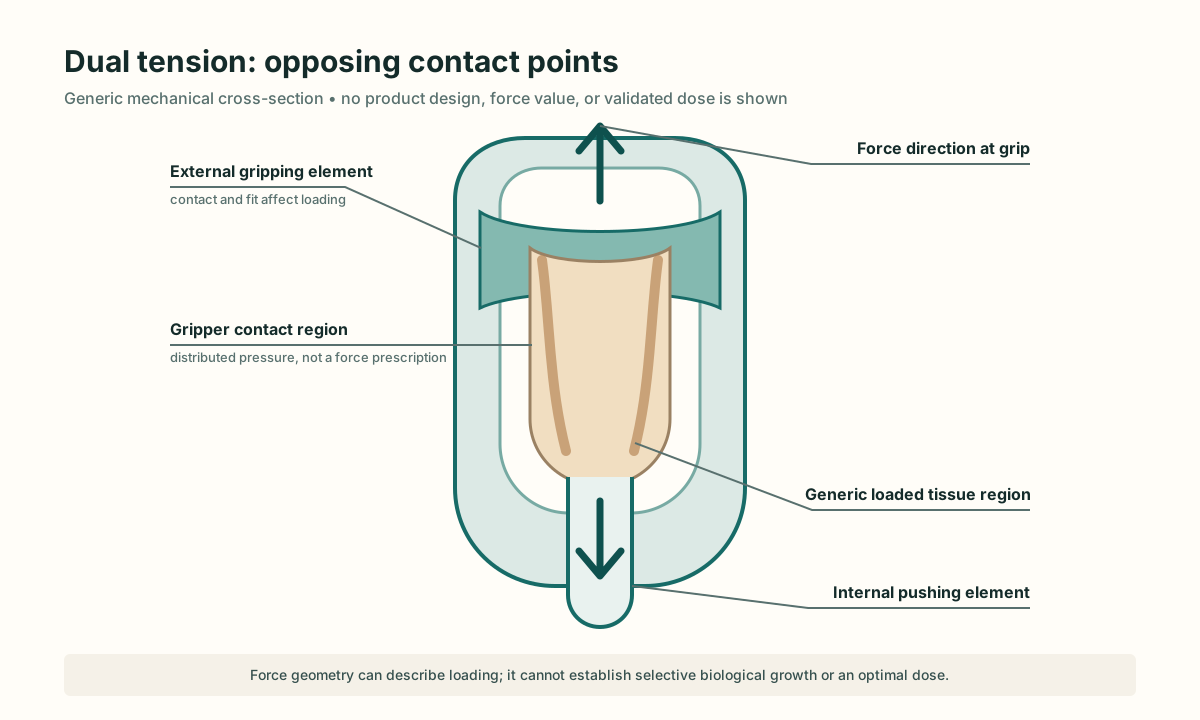
Why fit matters
- A gripping area that is too concentrated can create pressure points.
- Slippage can make loading inconsistent and tempt over-tightening.
- An internal element can create localized contact pressure.
- Individual scar position, mobility, and residual tissue change the geometry.
- Rapid, uncomplicated removal is important if symptoms develop.
Tension magnitude is only one dimension
Total exposure also depends on contact area, duration, tissue folding, friction, compression, circulation, and movement. Increasing an adjustment does not prove a faster biological response. General skin mechanobiology cannot validate a particular device setting [1].
Evidence and safety boundary
No controlled comparative study establishes dual tension as superior to manual, tugging, inflation, or weighted approaches. Stop for numbness, coldness, marked discoloration, persistent swelling, broken skin, bleeding, or pain. Comfort alone is not a complete safety test.