DIRECT ANSWER
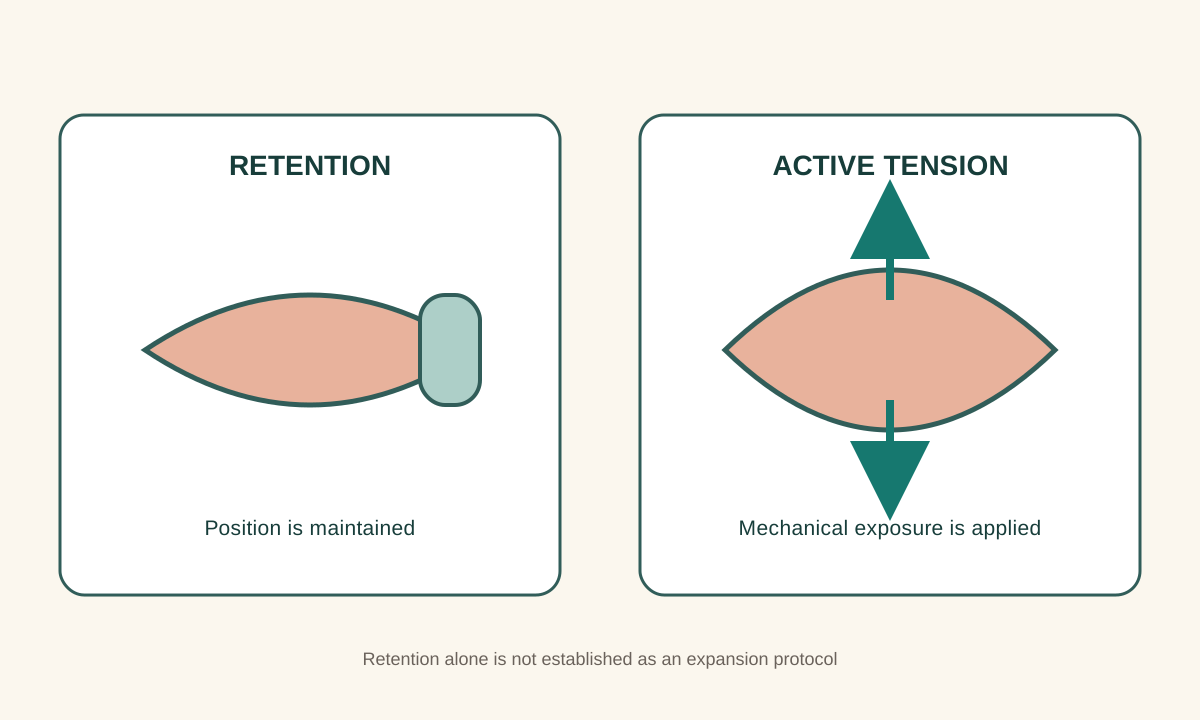
Retention holds mobile tissue forward to maintain coverage or positioning. Active tension deliberately creates mechanical loading intended to support expansion. The two can overlap mechanically, but temporary forward coverage is not automatically evidence of biological growth.
EVIDENCE SUMMARY
How strong and direct is the evidence?
Two different objectives
Retention
Maintains a chosen skin position. People may use it for comfort, reduced friction, or a different surface environment. Those are individual experiences, not proof of tissue growth.
Active tension
Creates deliberate mechanical exposure through hand traction, a strap, opposing device elements, inflation, or suspended mass. No category has a validated universal dose.
Why the distinction matters
Immediately after retention, skin may remain forward because of positioning, elasticity, moisture, or compression. That appearance can recede without showing that grown tissue disappeared. Conversely, sustained coverage may feel meaningful without demonstrating an increase in tissue area.
Biological expansion involves cellular and matrix responses over time [1]. Appearance alone cannot identify that process.
Retention still has safety considerations
A retainer can create gripping pressure, friction, trapped moisture, or constriction even if it is not intended as a high-tension device. Ease of removal, fit, cleanability, sensation, color, and temperature remain relevant. Comfortable use does not prove zero risk, and sleep use cannot be assumed safe.
Evidence boundary
Restoration studies have not established retention alone as an effective expansion protocol or quantified its independent contribution. Describe it as positioning or comfort support unless a particular growth claim is supported by future direct evidence.