DIRECT ANSWER
Track restoration with repeatable conditions, more than one measure, and longer comparison intervals. Coverage labels, photographs kept privately, measurements, and notes can document a trend, but none is a validated clinical measure and short-term swelling or elasticity should not be counted as growth.
EVIDENCE SUMMARY
How strong and direct is the evidence?
Why visual memory is unreliable
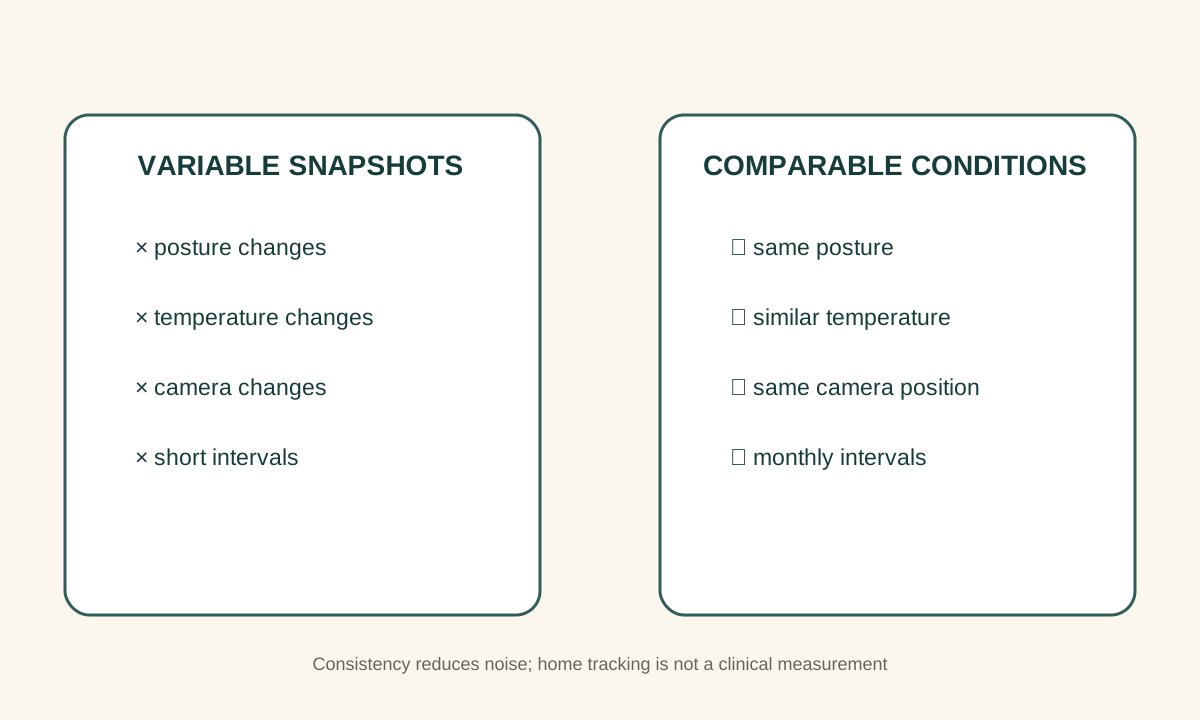
People adapt to gradual change and remember selected moments. Temperature, posture, activity, flaccid size, erection state, recent loading, and camera perspective can alter apparent coverage. A consistent record reduces—but does not eliminate—this noise.
A practical private record
- Choose the observation state.
Record flaccid and erect observations separately; do not combine them into one score.
- Standardize conditions.
Use similar room temperature, posture, time relative to device removal, camera distance, and anatomical landmarks.
- Use several descriptions.
Note a cautious CI range, visible landmark coverage, skin mobility, and any repeatable tape or ruler measurement that can be taken without compressing tissue.
- Record the routine.
Document method category, interruptions, comfort, skin reactions, and major changes without treating community schedules as science.
- Compare longer intervals.
Monthly review is generally more interpretable than obsessive daily comparison.
Photography without public exposure
A private standardized photograph can reduce recall error, but explicit imagery should not be uploaded publicly or shared unnecessarily. Consider device security, backups, cloud synchronization, metadata, and who can access the file. Foreskin Online does not accept progress-photo uploads.
Limits of each measure
Coverage Index
Accessible shorthand, but subjective, nonlinear, and sensitive to appearance.
Landmark or ruler measures
Potentially repeatable, but affected by placement, compression, posture, and tissue distribution.
Narrative notes
Useful for adherence and comfort context, but vulnerable to recall and expectation bias.
The 11-person cohort used nonvalidated observations and cannot define a predictive timeline [1].
Do not count injury as progress
Swelling, redness, compression marks, and temporary elasticity can change measurements. Allow transient effects to resolve. Pain, persistent numbness, marked discoloration, coldness, open skin, or continuing swelling require stopping and reassessment.